Picture a New Year’s Eve dinner at a hotel. The conference hall has several seat categories, some tables are set aside for performers, and the sales team is handling enquiries from the website, by phone and through business partners at the same time. The manager needs more than a total count of remaining seats. They need a precise answer to a much harder question: which seats are actually available, who has reserved them, and what has happened with each reservation so far?
In practice, the answer often lives in several disconnected records. One spreadsheet tracks reservations. Another shows the seating layout. A third records payments. Guest names and menu choices arrive later, usually in messages. On the day of the event, someone puts together a final list for the entrance team.
Excel is an excellent tool for overviews, calculations and ad hoc analysis. But when several people are changing the state of the same seat at the same time, it is not enough to serve as the single system for managing sales.
First probleman available seat count is not enough
For an event with assigned seating, ten available seats are not the same as an available table for ten. There may be two seats left at each of five tables, with no way for a family of six to sit together.
Records therefore need to relate to specific seats in the room. The table, individual seat and category are more than a note attached to a reservation. They are what is being reserved.
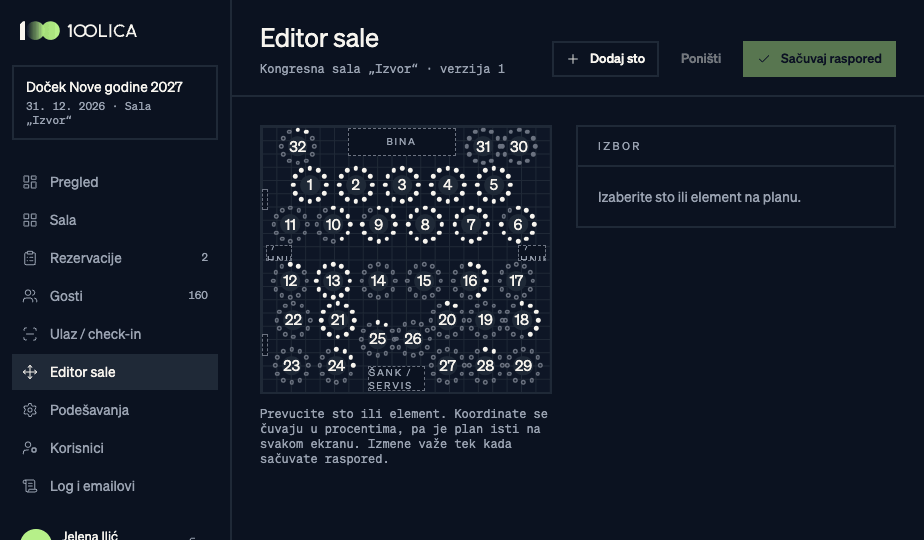
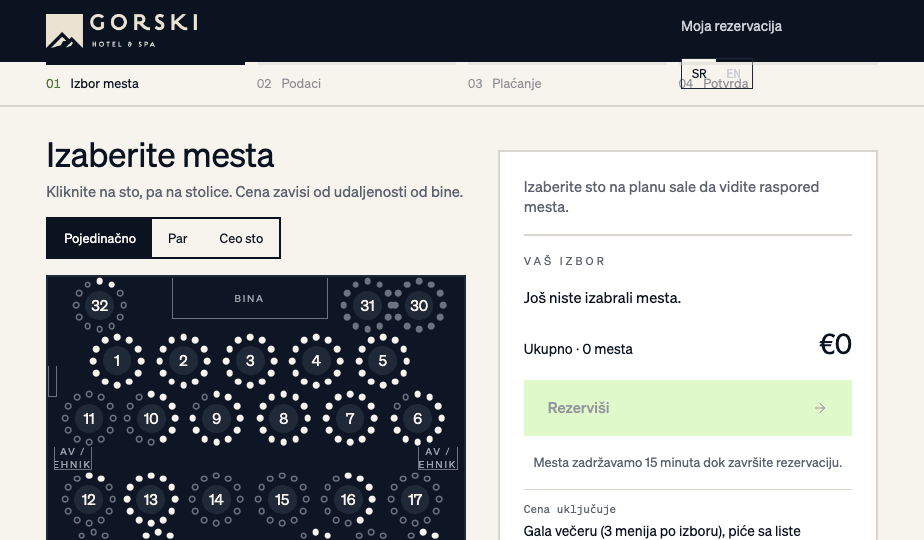
In 100LICA, the floor plan provides that connection. It shows actual tables and seats, with the availability and statuses used in the reservation process. Organisers can separate seats that are not for public sale, while guests choose from the seats available on the public view.
Second problemtwo people may want the same seat
When a spreadsheet is open on several computers, the state can change between the moment an employee sees it and the moment they save an update. The situation is more complex when a guest is choosing a seat on the website at the same time.
A modern reservation system needs to distinguish three moments: the seat is shown as available; it is temporarily held while the guest completes their details; and the reservation request has been processed and the state recorded.
100LICA includes time-limited holds and server-side availability checks. The reservation core uses transactions and conflict checks. That matters more than the colour of a seat on the map: a reservation must be confirmed against the state that is valid when the request is processed.
This is not a promise that software can never fail. It explains why reservation rules and conflict checks belong inside the business workflow.
Third problema reservation is not a payment
A guest may reserve eight seats and pay only part of the amount. If a spreadsheet has a field labelled “paid”, it is often unclear whether that means a deposit received, the full amount or simply something the guest reported by phone.
Event sales require reserved seats to be kept distinct from the financial position. Each reservation should show the total amount due, verified payments and the outstanding balance. If a group pays in several instalments, every step needs to make sense to the next colleague taking over.
100LICA supports manually recording verified payments, partial amounts, outstanding balances and PDF pro forma invoices. This is different from active online card payments or automatic bank reconciliation. That is precisely why clear statuses matter: a good system should not imply that money has been received when it has not been recorded.
- Reservation · 8 seats
- Table 12
- Total value
- €2,240.00
- Recorded
- €1,000.00
- Outstanding
- €1,240.00
Fourth problema guest list quickly becomes more than a list
For larger groups, the person making the reservation may not yet know every guest’s name. Menu choices, changes to companions and dietary notes arrive later. If those details are sent separately from the reservation, the kitchen and entrance teams can easily end up working with different versions.
When details are connected to reserved seats, the organiser can see who is assigned to each seat, which menu they have chosen and what still needs checking. In 100LICA, guests can use secure access to update details for seats that have already been reserved. This does not automatically buy extra seats or mean that every special dietary request has been approved.
A group does not have to arrive together, either. Check-in should support partial arrivals while keeping track of the number of guests still expected under the reservation.
- 01Reserved seats8 / 8
- 02Guest details and menus added6 / 8 names
- 03Arrivals recorded5 arrived · 3 expected
Fifth probleman event does not end when sales close
After the evening, management wants answers to specific questions. How many seats were reserved? How much was actually recorded as paid? Which amounts are still outstanding? How does the result compare with another programme in the same season?
That requires consistent definitions throughout the process. “Reserved”, “paid” and “outstanding” must not be used interchangeably. And when events operate in different currencies, simply adding amounts together without conversion rules does not produce a meaningful revenue figure.
100LICA provides event-level overviews and seasonal reporting. The value is not just a neat chart. It is that the report starts with the same reservations and records the team actually used.
What changes when operations are connected?
When the floor plan, reservations, financial status, guest details and check-in are part of a connected process, staff have less reason to ask who has the latest spreadsheet. A reservation change has a place in the records. A payment is tracked against the appropriate amount due. Guest details and menus stay attached to reserved seats. The entrance team does not have to start again from scratch.
This does not mean every hotel should stop using Excel. Spreadsheets remain excellent for analysis and exports. But they should not be the only authority on the right to a particular seat, its status and the information different teams need.
If the answers are unclear, the issue is probably how the processes connect, rather than another missing spreadsheet column.
See how 100LICA connects floor plans, reservations, payments and check-in.